ARTICLES
Christos Aristopoulos
PhD in Ancient History
University of Cyprus
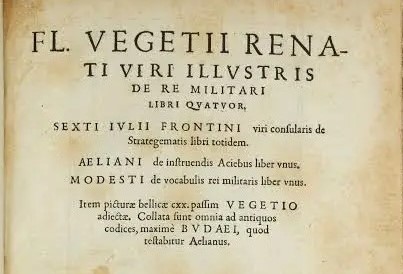
Abstract: The question of Vegetius’ potential impact upon the Late Roman armies stands out as a scholarly desideratum in the relevant field. Despite their anachronistic flavor, real or imagined, his proposals for the reformation of the imperial army are a direct Christian response to what his pagan contemporaries, philosophers and historians (Proklos, Ammianus Marcellinus) had already suggested as a reply to the crisis of the Empire by the late 4th and early 5th century. I will focus on the question of whether and to what extent the Eastern Roman Empire was affected on a practical level by Vegetius’ ideas. Except for a few passages from his third book that have been translated and added to the Strategikon of Maurice, no mention of Vegetius or his work is to be found in any of the sources dating after the 5th century AD throughout the entire Byzantine era. If his work did not remain a purely theoretical edifice but did exert some influence on military practice, traces of his doctrines might be found in the Codex Theodosianus and the Notitia Dignitatum. The Epitoma Rei Militaris is nowadays appreciated as a major source for revealing the structure of the Middle Roman army. This might not be irrelevant to the question of Vegetius’ lack of success in his times, regardless of the emperors or the semi-barbarian generals of foederati – the latter a favourite group of the author’s criticism. Vegetius has failed to adjust his exempla to the realities of warfare and the situation of the state after Adrianople and by the arrival of Attila.