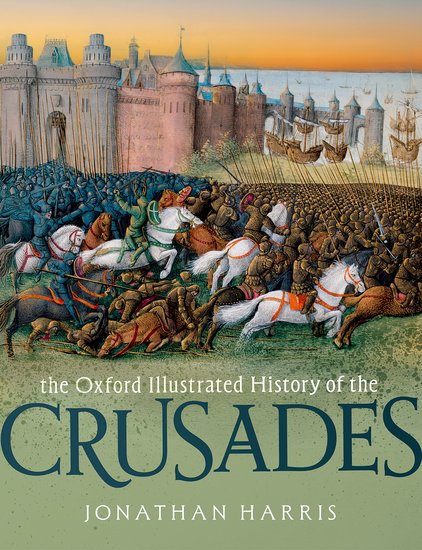
 The Oxford Illustrated History of the Crusades provides an accessible introduction to the medieval crusades and to the changes and developments that have taken place in their study over the last twenty-five years. Written by fifteen experts in the field, it opens with the nature of western European society in the eleventh century that gave rise to the holy war ethos, where the Church promoted violence against the perceived enemies of the faith not as a distasteful necessity in a fallen world but as a meritorious act which attracted a spiritual reward.
The launch of the First Crusade in 1095 and its capture of Jerusalem four year later is described, along with the subsequent expeditions to the Holy Land up to 1271. Later chapters focus on some of the less well-known aspects. These include the reaction in the Islamic world to the crusades; the impact on the Jewish communities of western Europe; the perspective from the Byzantine empire; the crusades launched against Christians, whether Orthodox Byzantines or Hussite and Albigensian heretics; the literature and songs to which the crusades gave rise and the physical monuments that can still be seen today. Crusading continued long after the fall of Acre, the last outpost in the Holy Land, in 1291, becoming increasingly defensive in the face of the expansion of the Ottoman empire, although Christian forays into Africa and the Americas in the fifteenth and early sixteenth centuries were still regarded as crusades. Even in the nineteenth century, crusades were looked back on as a model for contemporary European imperialism.